

The name Metternich is associated primarily with diplomacy and the political organization of Europe after the Napoleonic Wars, but also with specific places in Bohemia that still bear traces of his long-term influence.
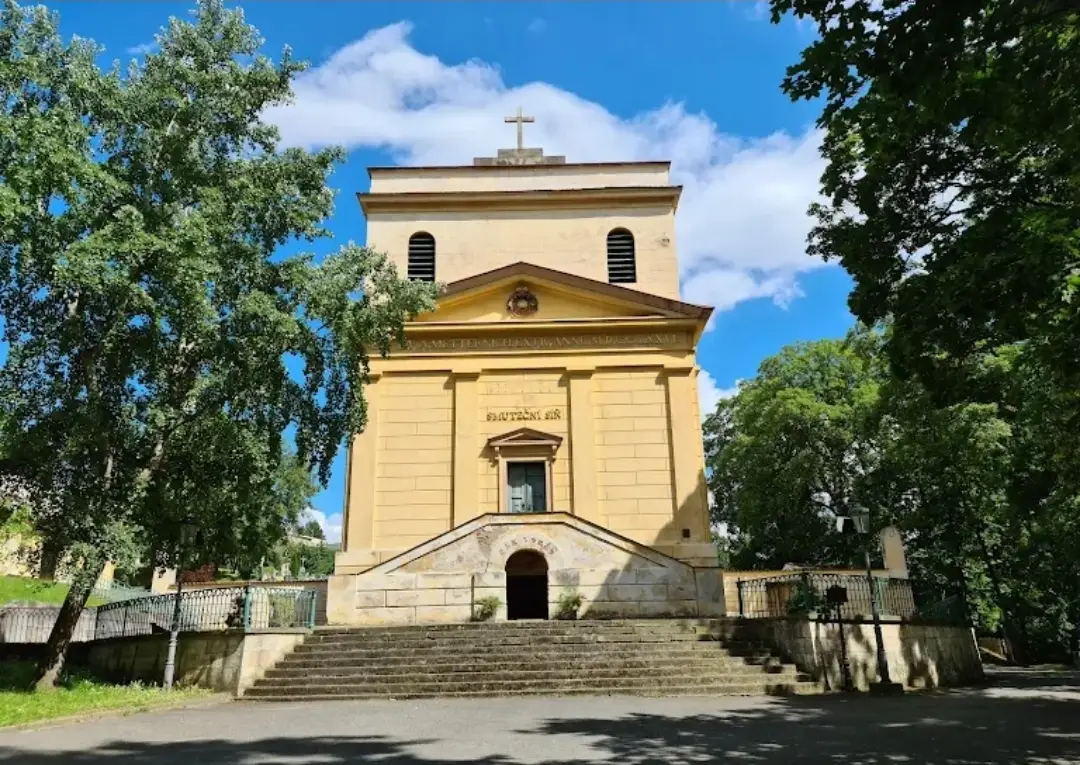
The most famous representative of the family was the Austrian statesman Klemens von Metternich-Winneburg, who linked the name Metternich with Western Bohemia. The Kynžvart Castle became an important family seat, serving not only as a residence but also as a place for strategically important political meetings.

The Metternichs shaped the region for several generations and became an important part of local life. Their presence was evident not only in the architecture and landscape but also in the social and cultural environment. It was only the political upheavals of the 20th century that ended their influence on Czech territory.
The family was one of those whose influence transcended the borders of individual countries. Since the 17th century, it had stood close to the imperial court and gradually became part of the political elite of Central Europe. It made its most significant mark in history at a time when Europe was searching for a new order after a period of revolutions and wars. Its story is a story of power, diplomacy and long-term influence on the shape of the continent.
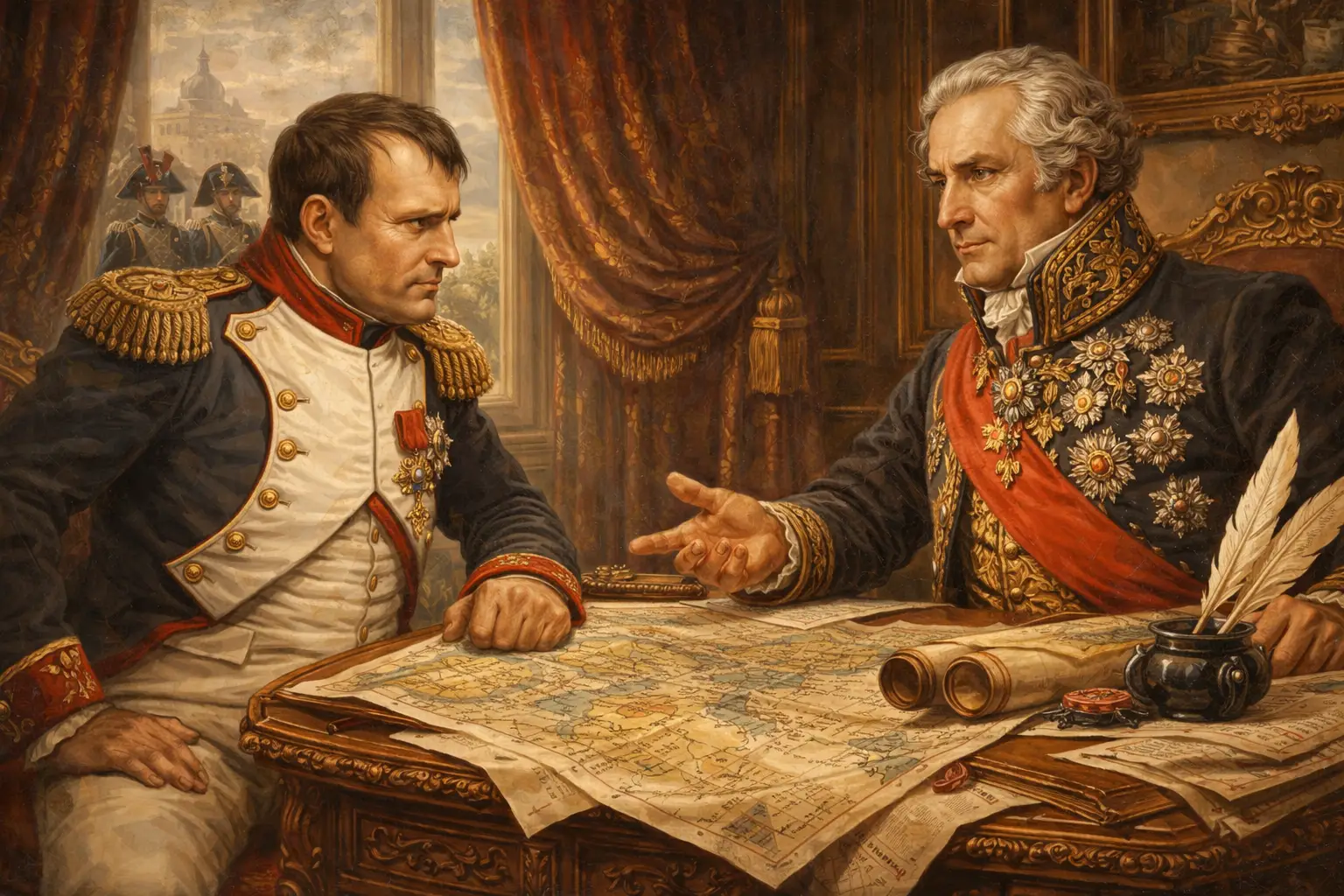
Key diplomatic achievements influenced European peace and politics. The family name is inextricably linked to the personality of Klemens von Metternich-Winneburg, one of the most influential diplomats of his time. During the Napoleonic Wars, this Metternich was able to gradually redirect Austrian policy so that the defeated power became a key force in the shaping of a new Europe.
His diplomatic strategy towards Napoleon Bonaparte was not based solely on force of arms, but on patient negotiation and thoughtful alliances. It was his ability to deal with and against Napoleon at the same time that made Metternich a symbol of political dexterity of his era.
While the name Metternich resonated with European politics, its presence was also firmly rooted in the Czech lands. The Metternichs were not only politicians, but also patrons of the arts and collectors. Their residences, especially the aforementioned Kynžvart Castle, were transformed into places housing valuable libraries, archive funds and art collections of European importance. Supporting cultural life and preserving historical monuments were a natural part of their work. Thanks to this, the family left a mark that goes beyond politics and remains visible to this day.
The family estates also included the area of the former Cistercian Monastery of Plasy, whose grounds became an important part of their Czech activities. The Metternichs supported local development here for generations, the legacy of which is still evident in the landscape and memory of the region.
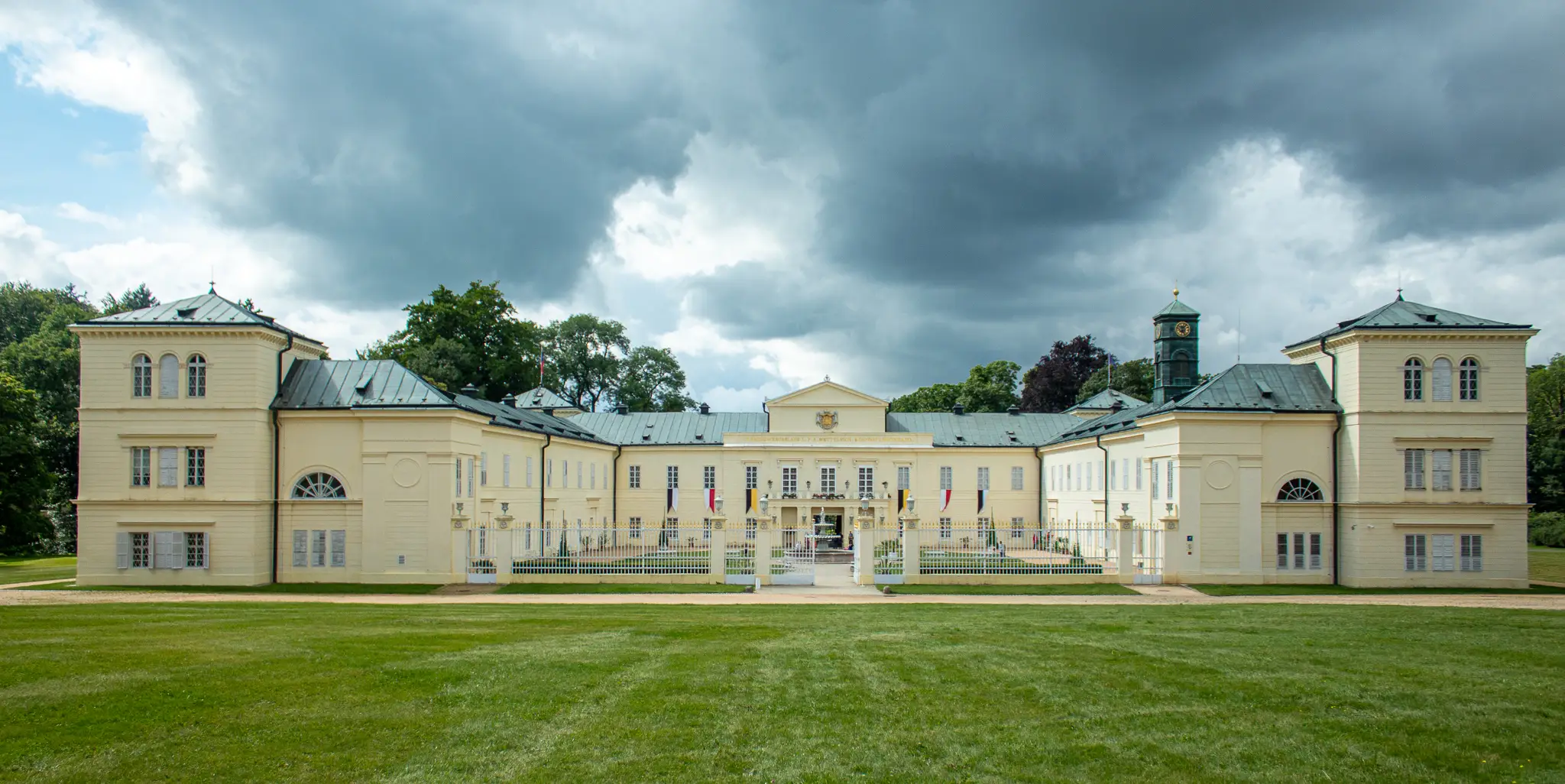

The Plasy Monastery complex also includes the Family Tomb, which became the final resting place of several generations of the family. It still commemorates the long chapter of their presence in the Czech lands.

The last known representative of the family was Paul Alfons von Metternich. He was born during a time of fundamental political changes and spent part of his life at Kynžvart Castle. After World War II, the family was deprived of its Czech property, thus ending a long period of Metternich presence in this region. His death in 1992 is traditionally considered the end of the male line of the family.
With this descendant, the publicly known line of the Metternich family in the Czech lands closes for a long time — the end of a chapter that was understood as definitive for decades.
The next chapter of ancestral existence begins.
However, history sometimes continues differently than the way history records it.
True lineage continuity revealed by connecting genealogy and genetics. This site focuses on one particular lineage that was thought to be extinct for decades.

Family stories are usually told through documents, names, and dates. But what truly endures is not just stored in archives, it is indelibly stored in human memory, in the body — and above all, in biological hereditary DNA.
Modern genetic methods, combined with careful genealogical research, show us a different picture: biological continuity has never been interrupted, it has simply remained hidden outside the official records. It is not about returning to the past or rewriting it. It is about understanding how lineage is actually transmitted — silently, naturally, and regardless of whether it is recorded.

The successor of the family line is Pavel Kukla Metternich, who has dedicated a considerable part of his life to the study of archival materials mapping the history of the important Metternich family and at the same time researching technologies dealing with the preservation of their unique heritage in the form of DNA.

His work has always been based on the belief that the past can be learned not only through documents stored in archives, but also through the biological memory carried in human genetics.
He graduated from the Faculty of Medicine of Charles University, majoring in dentistry. It was his study of medicine and a deeper understanding of the human body that gradually led him to an interest in genetics and the possibility of preserving ancestral information in DNA.
He holds two national patents relating to a new technology for archiving complete human DNA, the further potential of which lies in its future processing using artificial intelligence for the purpose of researching hereditary diseases and developing new therapeutic agents.
He archived the precious DNA of one of the last members of the Metternich family and preserved it in an original gold piece of jewelry, the uniqueness of which symbolically underlines the rarity of this genetic memory. He thus connected historical family sources with the latest findings of modern science.
At the same time, he is at the origin of the DNA Archive of Significant National Figures project, which aims to preserve the genetic footprint of significant people who shaped the history and culture of the nation.
His work reminds us that history is not just a set of records in archives, but above all a living memory carried from generation to generation — in human hereditary DNA itself.

Based on genetic and genealogical research,
Pavel accepted his affiliation with the Metternich family
as a fact.
The historical continuity of the famous family
remains preserved.
